
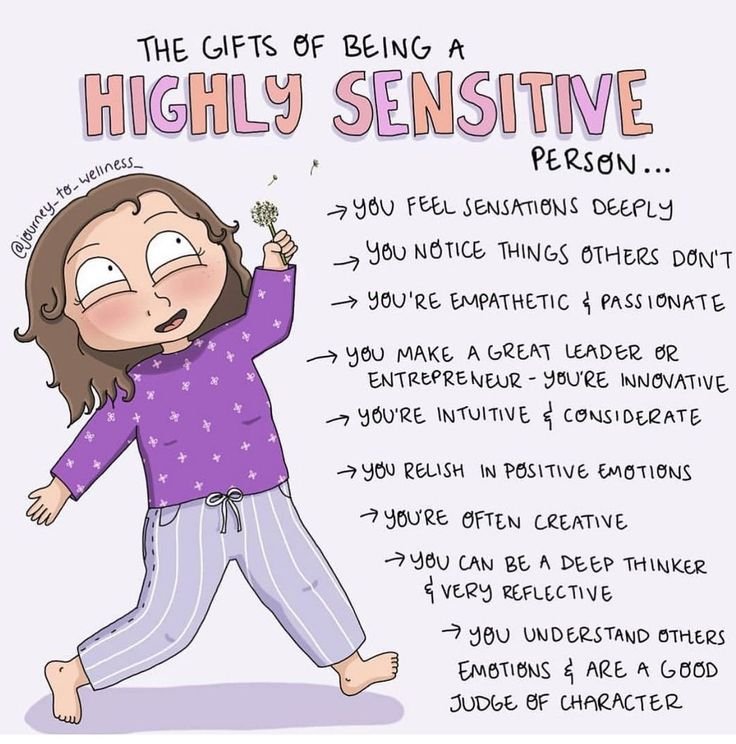

Have you ever been told that you are “too sensitive,” that you “overthink everything,” or that you need to “grow a thicker skin”?
Every Highly Sensitive Person experiences the world with unique intensity.
If loud noises drain you, violent movies stay in your head for days, or you can instantly feel the mood of a room the second you walk into it, you aren’t broken. You might be an HSP—a Highly Sensitive Person.
Coined by psychologist Dr. Elaine Aron in the 1990s, HSP is not a disorder or a flaw. It is a scientifically recognized personality trait found in about 15% to 20% of the population (and yes, it exists in animals too!).
In this blog, we’ll explore what it truly means to be an HSP, how to navigate the challenges, and how to turn your high sensitivity into your greatest superpower.
Table of Contents
What Exactly is an HSP? (The Science Behind It)
Being an HSP means having a more finely tuned nervous system. Your brain processes information, sensory inputs, and emotional cues much more deeply and thoroughly than the average person.
Think of it like an ultra-high-definition camera:
while everyone else is capturing standard photos, your brain is capturing every tiny detail, shadow, and color nuance in the environment.
Common Signs You Might Be an HSP:
Sensory Overload:
Bright lights, strong smells, scratchy fabrics, or chaotic, noisy environments exhaust you quickly.
Deep Empathy:
You absorb the emotions of people around you. If a friend is sad, you literally feel heavy inside.
Needing Down Time:
After a busy social event, you need quiet time alone in a dark or calm room to “recharge” your battery.
Rich Inner World:
You have a vivid imagination, a deep appreciation for art and music, and a profound inner emotional life.
You notice micro-expressions and subtle shifts in body language that others completely miss.
The Daily Struggle:
Many a Highly Sensitive Person struggles with high-functioning anxiety due to everyday sensory overload.
Why the World Can Feel Exhausting
While high sensitivity comes with incredible gifts, living in a fast-paced, loud, and constantly connected modern world can lead to constant burnout.
Many HSPs suffer from High-Functioning Anxiety—pushing themselves through sensory-overloaded workdays, masking their exhaustion, and crashing the moment they get home.
When your nervous system is constantly bombarded by notifications, background noise, and emotional demands, it gets stuck in a perpetual “fight-or-flight” mode.
This can lead to chronic fatigue, irritability, and emotional overwhelm.
4 Ways to Protect Your Energy and Thrive as an HSP
You don’t have to change who you are or shield yourself from the world completely. Instead, you can learn to manage your energy like a precious resource.
Here are 4 practical ways to heal and thrive:
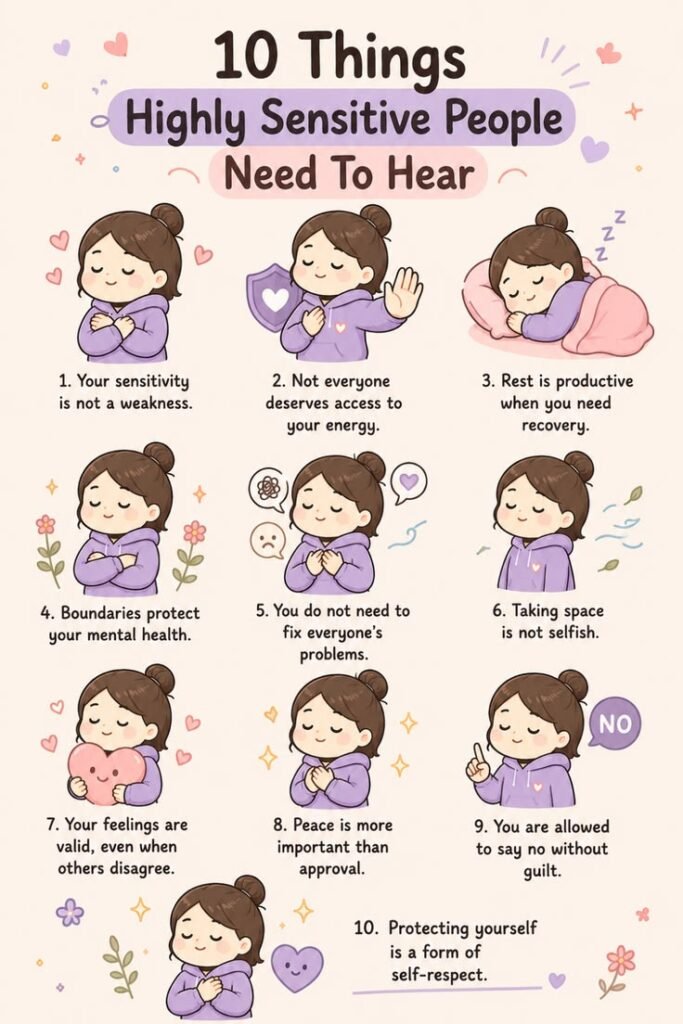
When a Highly Sensitive Person learns to set proper boundaries, life becomes much more peaceful.
1. Build “Low-Stimulus” Micro-Breaks into Your DayDon’t wait until you are completely burned out to rest. Every few hours, step away from screens, turn off the music, and sit in silence for 5 minutes. Close your eyes and focus entirely on deep, slow belly breaths to regulate your nervous system.
2. Set Fierce Energetic Boundaries As an HSP, people naturally gravitate toward you for comfort because you are a great listener.
However, absorbing everyone else’s emotional baggage will drain you dry. Learn to gently detach and remind yourself: “This is not my energy to carry.” Practice saying “no” without guilt.
3. Practice a Digital and Sensory DetoxUnplug from social media and news feeds regularly. Constant doomscrolling and digital noise are major triggers for sensory overload. Spend time in nature—trees, quiet parks, and open green spaces act as a natural reset button for an overstimulated brain.
4. Reframe Your Sensitivity as a SuperpowerSociety often glorifies toughness, but the world desperately needs deep thinkers, empathetic leaders, creators, and healers.
Your ability to notice details, care deeply, and connect authentically is a rare gift.
Final Thoughts:
Honor Your Wiring Being an HSP in a non-HSP world can feel lonely at times, but once you understand your unique wiring, everything changes. Stop treating your sensitivity like a weakness to be fixed. Instead, treat it like a delicate instrument that requires care, respect, and proper tuning.
Are you an HSP, or do you know someone who is? How do you protect your energy from burnout? Let’s talk about it in the comments below!
Our Healing therapies will help you to fight with these issues for services you can contact us on given number..
What does it mean to be an HSP?
Being an HSP (Highly Sensitive Person) is a scientifically recognized personality trait characterized by having a more finely tuned nervous system. HSPs process sensory inputs, emotions, and environmental details much more deeply than others.
Is being a Highly Sensitive Person a mental disorder?
No, high sensitivity is not a disorder, illness, or flaw. It is a normal, natural personality trait—often found in about 15% to 20% of the population—that simply means your brain and nervous system process the world more intensely.
What are the main signs of being an HSP?
Common signs include feeling easily overwhelmed by bright lights, loud noises, or chaotic environments, absorbing the emotions of people around you, needing frequent quiet downtime to recharge, and having a rich, deep inner emotional life.
How can an HSP protect their energy and prevent burnout?
HSPs can protect their energy by setting firm emotional and energetic boundaries, taking low-stimulus micro-breaks throughout the day, practicing digital detoxes, and spending time in quiet nature to calm an overactive nervous system.